
 A return-to-duty (RTD) drug test is one of the most misunderstood parts of workplace drug testing. Many employers assume that once an employee passes a drug test, they can immediately return to work. However, for employees in safety-sensitive roles, particularly those regulated by the U.S. Department of Transportation (DOT), returning to work involves far more than a single negative test result.
The RTD process is a structured compliance program designed to protect employees, employers, and the public. It includes evaluations by a qualified substance abuse professional (SAP), recommended treatment or education, documented compliance, an RTD drug test, and ongoing follow-up testing. Missing even one step can create regulatory issues, increase liability, and compromise workplace safety.
Whether your organization is subject to DOT regulations or maintains its own workplace drug testing program, understanding the RTD process helps ensure consistent compliance while supporting employee accountability. Here's what every employer should know.
Return to Duty Drug Test Explained
An RTD drug test is required before an employee may resume safety-sensitive duties after violating a workplace drug or alcohol policy.
For DOT-regulated employees, federal regulations establish a detailed RTD process that employers must follow before allowing an employee to perform a safety-sensitive function again. Commercial motor vehicle drivers, pipeline workers, railroad employees, aviation personnel, and other transportation employees all fall under these requirements.
Outside DOT-regulated industries, employers may also require an RTD test after a workplace policy violation. While these programs offer greater flexibility, many employers adopt similar procedures to reduce risk and maintain consistency.
Return-to-duty testing serves several important purposes:
- Promotes workplace safety
- Supports regulatory compliance
- Reduces organizational risk
- Reinforces employee accountability
- Demonstrates a commitment to a drug-free workplace
Rather than viewing RTD testing as a disciplinary measure, employers should see it as an important safeguard that verifies employees have completed all required steps before returning to safety-sensitive work.
When Is a Return-to-Duty Drug Test Required?
Several situations may trigger an RTD drug test.
Common examples include:
- A positive drug test result
- A positive alcohol test result
- Refusal to submit to required testing
- Other DOT-defined violations involving drug or alcohol testing
Employees regulated under DOT rules cannot simply retake a test after a violation. They must complete the entire RTD process before returning to any safety-sensitive duty.
For non-DOT employers, RTD testing requirements depend on company policy. Some organizations require SAP evaluations similar to DOT procedures, while others establish their own rehabilitation and testing requirements before an employee returns to work.
This is why clearly written workplace drug testing policies are essential. Employers that regularly review and update their policies are better prepared to apply procedures consistently and minimize confusion when violations occur.
What Is a Substance Abuse Professional?
A SAP is an independent compliance professional required under DOT regulations to evaluate employees who violate drug and alcohol testing requirements. The SAP plays a critical role in determining whether an employee has successfully addressed the violation and is eligible to move forward in the RTD process by providing:
- An initial evaluation
- Treatment or education recommendations
- A follow-up evaluation
- A follow-up testing plan
The SAP doesn’t decide whether an employee keeps their job or returns to employment; this decision remains with the employer. Instead, the SAP focuses solely on regulatory compliance and successful completion of the required treatment or education program.
Maintaining this independence helps ensure the process remains objective and consistent across regulated industries.
Step-by-Step Return-to-Duty Process
The RTD process involves several required stages. Each builds upon the previous one, and employers should verify completion before moving to the next step.
Step 1: Employee Violates Drug or Alcohol Policy
The process begins when an employee:
- Fails a drug test
- Fails an alcohol test
- Refuses required testing
- Commits another DOT-defined testing violation
Once the violation occurs, the employee must be removed from performing safety-sensitive duties immediately.
Step 2: Referral to a Substance Abuse Professional
The employer refers the employee to a qualified SAP, who then begins an independent assessment to determine the appropriate education, treatment, or rehabilitation program based on the employee's specific circumstances.
Step 3: SAP Evaluation and Recommended Treatment
Following the evaluation, the SAP develops an individualized treatment plan, which may include recommendations such as:
- Substance abuse education
- Counseling
- Rehabilitation
- Additional treatment services
Every recommendation is based on the employee's individual evaluation rather than a standardized program.
Step 4: Follow-Up SAP Evaluation
After completing the recommended treatment or education, the employee returns to the SAP, who then determines whether the employee has successfully complied with all recommendations and is eligible to continue the RTD process.
Step 5: Return-to-Duty Test
Once cleared by the SAP, an employee can complete the required RTD drug test.
For DOT drug testing, this is typically a directly observed test. The employee must receive a negative test result before performing any safety-sensitive work again.
Step 6: Follow-Up Testing Program
Returning to work does not end the process. The SAP will establish a follow-up testing plan that specifies additional testing over a defined period. Employers must ensure these required follow-up tests are completed according to the SAP's schedule.
DOT vs. Non-DOT Return-to-Duty Testing
Although both programs aim to promote workplace safety, important differences exist.
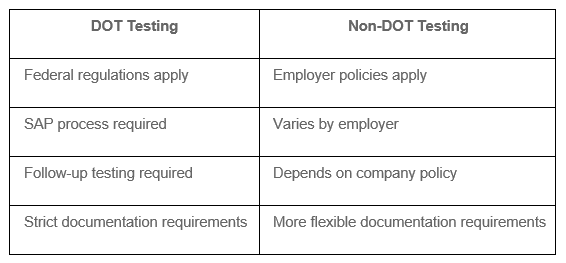
Employers subject to federal transportation regulations should carefully follow applicable DOT drug testing requirements, while non-DOT organizations should establish consistent procedures that align with their own workplace policies.
Employer Return to Duty Drug Testing Responsibilities
Managing RTD testing involves much more than scheduling a drug test. Employers should focus on four key responsibilities.
- Maintain compliance: Follow all applicable DOT regulations under federal oversight, or, for non-DOT employers, consistently enforce internal workplace policies across all employees.
- Keep accurate documentation: Maintain complete records of test results, SAP documentation, follow-up testing records, and compliance activities. Accurate documentation helps demonstrate compliance during audits or regulatory reviews.
- Enforce RTD requirements: Never allow employees to resume safety-sensitive duties before the completion of every required step. Verifying compliance protects both employees and the organization.
- Review policies regularly: Drug testing policies should evolve alongside changing regulations, including evolving marijuana workplace policies, state laws, and workplace best practices. Regular policy reviews help employers remain compliant while providing clear expectations for employees.
Common Mistakes to Avoid When Conducting Return to Duty Drug Tests
Even experienced employers can make mistakes during the RTD process. Some of the most common include:
- Skipping required SAP involvement
- Allowing employees to return too soon
- Missing required follow-up tests
- Maintaining incomplete documentation
- Applying policies inconsistently
These mistakes can result in:
- Regulatory compliance violations
- Increased legal liability
- Greater workplace safety risks
- Potential penalties during DOT audits
Establishing standardized procedures and partnering with an experienced testing provider helps reduce these risks while improving consistency.
Fastest Labs: Simplifying Return-to-Duty Testing
An RTD drug test is only one component of a much larger compliance process. Employers must coordinate testing, documentation, SAP requirements, follow-up testing, and regulatory obligations to ensure employees return safely and legally to work.
Fastest Labs helps simplify every stage of the RTD process, with HR professionals, safety managers, and compliance teams relying on the approved provider for fast scheduling, nationwide testing services, accurate testing procedures, documentation support, and guidance for both DOT and non-DOT testing programs.
Beyond RTD testing, Fastest Labs provides employers with comprehensive workforce screening solutions, policy guidance, ongoing compliance programs, and drug and alcohol testing services that can help businesses continue operating safely and efficiently.
Whether you're managing a single employee's RTD process or overseeing an enterprise-wide compliance program, Fastest Labs delivers the speed, accuracy, consistency, and compliance-focused service employers need.
Find a Fastest Labs near you for assistance managing RTD testing or DOT compliance requirements.
FAQs
What Is a Return-to-Duty Drug Test?
An RTD drug test is a required drug test that verifies an employee is eligible to resume safety-sensitive duties after completing all required steps following a drug or alcohol testing violation.
When Is a Return-to-Duty Drug Test Required?
It is required after certain workplace drug or alcohol violations, including positive drug test results, positive alcohol test results, refusals to test, or other DOT-defined violations. DOT-regulated employees must complete the full RTD process before returning to safety-sensitive work.
What Is the Substance Abuse Professional Process?
The SAP process includes an initial evaluation, treatment or education recommendations, successful completion of those recommendations, a follow-up evaluation, an RTD test, and a follow-up testing plan established by the SAP.
What Happens After a Failed Drug Test?
For DOT-regulated employees, the individual is immediately removed from safety-sensitive duties, referred to a qualified SAP, and must complete the entire RTD process before returning to work.
Can an Employee Return to Work Before Completing the SAP Process?
DOT regulations prohibit employees from performing safety-sensitive functions until all the required steps are completed, including SAP clearance and a negative RTD test result.
Who Is Responsible for Follow-Up Testing?
The SAP determines the follow-up testing schedule, while the employer is responsible for ensuring the required testing is completed according to the established plan.
How Long Does the Return-to-Duty Process Take?
The timeline varies depending on the employee's treatment or education requirements and how quickly each required step is completed. Because every case is unique, there is no standard timeframe for RTD completion.