 An employee gets injured on the job, a company vehicle is involved in a serious accident, or a supervisor notices that a normally reliable worker is increasingly struggling to complete routine tasks. When situations like these occur, employers need clear procedures to help them respond quickly, fairly, and consistently.
A clear workplace drug testing policy provides a consistent process that can help organizations across many industries — from transportation and construction to healthcare, manufacturing, and other safety-sensitive workplaces — reduce risk and support a safer work environment.
The challenge is that workplace drug testing is becoming more complex. Marijuana legalization continues to expand, state laws are changing, and employers must navigate a growing number of compliance considerations. As a result, a policy that functioned well several years ago may now require updates.
Today, successful drug testing programs adjust to changing laws, help employers establish clear expectations, protect workplace safety, and ensure employees and managers understand what happens when testing is required.
Whether your company is creating its first testing program or reviewing an existing policy, understanding how workplace drug testing works is the first step toward building a program that supports both compliance and safety.
Drug Testing in the Workplace
Drug testing in the workplace represents the process of screening applicants or employees for specific substances as part of an employer’s safety, compliance, and risk management efforts.
Employers may use drug testing at different points throughout the employment relationship, including during hiring, after workplace incidents, when there is reasonable suspicion of impairment, or as part of ongoing compliance programs.
Common types of drug testing in the workplace include:
- Pre-employment testing
- Random drug testing
- Reasonable suspicion drug testing
- Post-accident drug testing
- Return-to-duty testing
- Follow-up testing
The purpose of employer drug testing varies by organization. Some businesses must comply with federal requirements, while others use testing to support a drug-free workplace policy and reduce potential safety risks.
A well-managed drug testing program can help employers:
- Promote workplace safety
- Reduce the risk of accidents and liability
- Meet regulatory requirements
- Support drug-free workplace initiatives
- Protect employees, customers, and company operations
Employers can play an important role in creating workplaces that address substance use while maintaining safety and accountability.
Is Workplace Drug Testing Legal?
Workplace drug testing is generally legal in the United States, but the rules governing testing vary depending on state law, industry requirements, and the type of employee being tested.
Some employers must follow federal regulations. For example, the Drug-Free Workplace Act applies to certain federal contractors and grant recipients, requiring them to maintain programs designed to prevent illegal drug use in the workplace.
Employers with transportation workers covered by the Department of Transportation (DOT) must follow additional requirements for drug and alcohol testing. DOT-regulated employers must comply with specific rules regarding testing procedures, collection methods, reporting, and the involvement of a medical review officer, making it essential to fully understand DOT requirements to maintain a safe and compliant drug testing program.
Employers must also consider protections under the Americans with Disabilities Act. While employers may generally test for illegal drugs, they should be careful when handling information related to:
- Prescription medication
- Medical conditions
- Substance use disorder treatment
Cannabis has added another layer of complexity for employers. Although many states now allow medical or recreational marijuana use, state laws do not always provide the same protections for employees or the same requirements for employers. Businesses should regularly review their marijuana policy to ensure their approach reflects current cannabis laws and workplace requirements.
Types of Drug Testing Used in the Workplace
Employers use different testing methods depending on their industry, workplace policies, safety concerns, and regulatory obligations.
Common workplace drug testing methods include:
- Urine testing
- Hair testing
- Oral fluid testing
- Breath alcohol testing
The right testing method depends on factors such as detection periods, company requirements, and applicable regulations.
Pre-Employment Testing
Pre-employment drug testing is one of the most common forms of employment drug testing, particularly in industries where safety is a major concern, including transportation, construction, manufacturing, and logistics.
Many employers conduct a pre-employment drug test after extending a conditional job offer. This allows businesses to make informed hiring decisions and establish clear expectations before an employee begins work.
Random Drug Testing
Random drug testing involves selecting employees for testing without advance notice. However, it must be conducted in accordance with established procedures to ensure fairness and accuracy.
It’s often used in safety-sensitive positions because it can help deter workplace drug use and reinforce company policies. Many DOT-regulated employers are required to conduct random testing as part of their compliance obligations.
Reasonable Suspicion Testing
Reasonable suspicion drug testing occurs when a supervisor observes signs that suggest an employee may be impaired while working.
Examples may include:
- Slurred speech
- Unusual behavior
- Impaired coordination
- Actions creating workplace safety concerns
Because these decisions can be sensitive, supervisor training is critical. Before requesting a test, managers should know how to:
- Identify potential impairment indicators
- Properly document observations
- Follow company procedures
Post-Accident Testing
Post-accident drug testing may be conducted following a workplace accident or safety incident.
Employers may use drug testing as part of an investigation to determine whether illegal substance or alcohol use contributed to the event. Certain industries may also have specific requirements regarding post-accident testing.
Return-to-Duty and Follow-Up Testing
Return-to-duty and follow-up testing are commonly used after an employee violates a workplace drug or alcohol policy or completes a required process following a positive test result.
These testing programs help employers maintain workplace safety while providing a structured process for employees returning to work.
When Can Employers Test Employees?
Employers can conduct workplace testing in several situations, but the requirements depend on applicable laws and company policies.
Common Testing Situations
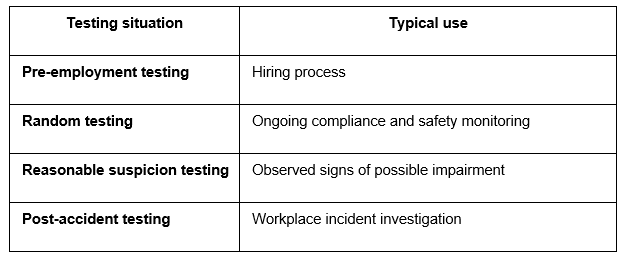
Before implementing or changing a drug testing program, employers should review federal, state, and local requirements to ensure their policy aligns with current laws, as some states restrict certain types of workplace testing and may require specific employee notification procedures. Cannabis-related protections also vary by state.
How To Create a Workplace Drug Testing Policy
A written drug testing policy helps employers reduce risk, maintain consistency, and communicate expectations clearly.
When creating a workplace drug testing policy, employers should consider the following steps:
Step 1: Define the Purpose of the Program
Start by identifying why testing is needed. Common goals include:
- Improving workplace safety
- Meeting regulatory requirements
- Reducing risk
- Supporting a drug-free workplace
Step 2: Choose Appropriate Testing Types
Determine which testing situations apply to your organization, such as:
- Pre-employment testing
- Random testing
- Reasonable suspicion testing
- Post-accident testing
- Return-to-duty testing
The right approach depends on business operations, workforce needs, and legal requirements.
Step 3: Establish Clear Procedures
A policy should explain:
- What triggers the right to conduct drug testing
- Collection procedures
- Confidentiality expectations
- Employee responsibilities
- How test results are reviewed
- Consequences for policy violations
Working with a certified laboratory and experienced testing provider can help employers maintain accurate procedures.
Step 4: Communicate the Policy to Employees
Employees should understand workplace testing requirements before they become an issue. Policies should be:
- Included in employee handbooks
- Acknowledged in writing
- Supported with supervisor training
- Expanded on to adhere to safety and compliance regulations
Step 5: Ensure Legal Compliance
To keep policies current and compliant, employers should regularly review:
- Federal regulations on drug testing in the workplace
- State-specific workplace drug testing requirements
- Marijuana law regulations
- Industry requirements
Step 6: Partner With a Testing Provider
A reliable testing partner can help employers:
- Ensure accurate testing
- Provide consistent collections
- Get fast and accurate results
- Access appropriate testing methods
- Adhere to compliance requirements
Best Practices for Workplace Drug Testing
A successful drug testing program depends on more than simply ordering drug tests. Employers need a consistent approach that employees understand and managers can follow, that includes:
- Maintaining consistency: Employers should apply policies equally across employees in similar situations. Selective enforcement or inconsistent decisions can create legal concerns and damage employee trust.
- Prioritizing transparency: Clear communication of expectations, circumstances leading to testing, what happens when test results are returned, and what happens after a policy violation can help prevent misunderstandings and reinforce a culture of accountability.
- Maintaining thorough documentation: Accurate documentation helps demonstrate that workplace testing decisions are based on established procedures rather than personal judgment. Important records include policy acknowledgments, supervisor training records, testing records, workplace observations, and employee communications.
- Training supervisors: Training should help managers recognize possible signs of impairment, document observations appropriately, follow established procedures accurately, and understand when reasonable suspicion testing may be appropriate. Without proper training, supervisors may unintentionally create compliance issues or mishandle sensitive situations.
- Review policies regularly: Employers should assume their workplace drug testing policy will not remain compliant forever. Changes involving marijuana legalization, employment protections, and federal regulations can require an updated workplace drug testing policy.
- Use a reliable drug testing partner: Working with an approved provider can ensure accurate collections, compliance support, fast results, and nationwide consistency.
Common Mistakes Employers Make
Even well-intentioned employers can make mistakes when managing workplace drug testing, such as:
- Using outdated policies: Drug testing laws and cannabis regulations change frequently. Employers should regularly update drug testing policies to reflect current requirements.
- Inconsistent enforcement: Applying policies differently among employees can create legal concerns and undermine trust.
- Poor documentation: Without clear records, employers may struggle to demonstrate that testing decisions were based on established procedures.
- Lack of supervisor training: Managers who are not properly trained may mishandle reasonable suspicion situations.
- Managing compliance alone: Federal and state requirements can be complicated. A professional testing partner can help simplify the process.
How Fastest Labs Supports Workplace Drug Testing
A workplace drug testing program should give employers confidence that their procedures are accurate, consistent, and compliant.
Fastest Labs helps businesses implement workplace testing programs with reliable drug, alcohol, and DOT testing services. From employee screening to compliance support, Fastest Labs helps organizations navigate testing requirements, maintain consistent procedures, and receive fast results.
Whether you are creating a new drug testing policy or reviewing an existing program, Fastest Labs can help simplify the testing process.
Find a Fastest Labs near you to learn how your organization can build a workplace testing program that supports safety and compliance.
FAQs About Drug Testing in the Workplace
Is Drug Testing Legal in the Workplace?
Workplace drug testing is generally legal, but requirements vary by state, industry, and employee classification.
What Types of Drug Tests Are Used?
Common drug tests include urine testing, hair testing, oral fluid testing, and alcohol testing. Employers choose testing methods based on their policies, workplace needs, and regulations.
When Can Employers Test Employees?
Employers may conduct testing during hiring, random testing programs, in situations of reasonable suspicion, post-accident investigations, and return-to-duty processes.
How Do You Create a Workplace Drug Testing Policy?
Employers should define program goals, select appropriate testing methods, establish procedures, train supervisors, communicate expectations, and regularly review compliance requirements.
Does Marijuana Legalization Affect Workplace Drug Testing?
Cannabis laws vary by state, and employers should regularly review policies to ensure they remain compliant with current requirements.