

Workplace drug testing plays an important role in maintaining a safe, compliant, and increasingly productive workplace. Across industries, employers use drug screening not only to protect employees but also to reduce risk and uphold organizational integrity. Yet, not all tests are the same, and understanding the differences is key to implementing an effective program.
Some tests are federally mandated, particularly for safety-sensitive positions, while others are established by company policy to support a drug-free workplace. Knowing when and how to apply Department of Transportation (DOT) as opposed to non-DOT drug testing can make a significant difference in compliance, safety, and operational efficiency.
This guide breaks down the distinctions between DOT and non-DOT drug testing, outlines testing procedures, and provides practical guidance for designing or managing workplace testing programs. By the end, you’ll have the insight to select the right testing method for your workforce while maintaining safety and regulatory compliance.
What Is a DOT Drug Test?
DOT drug testing is a federally mandated program that applies to employees in safety-sensitive transportation roles, including truck drivers, airline pilots, railroad operators, and certain pipeline workers. Its primary goal is to protect public safety by ensuring that individuals performing high-risk duties are not impaired by alcohol or drug use.
Regulated under 49 CFR Part 40, DOT testing programs must adhere to strict federal testing requirements and documentation standards. DOT-regulated employers must follow all testing procedures, including chain of custody, laboratory accreditation, and review by a Medical Review Officer (MRO) or substance abuse professional when necessary.
DOT testing is conducted in six primary situations:
- Pre-employment testing.
- Random testing.
- Post-accident testing.
- Reasonable suspicion testing.
- Return-to-duty testing.
- Follow-up testing.
The standard DOT drug screen uses urine drug testing; however, some programs may also allow oral fluid testing. Substances screened include marijuana, cocaine, opiates, amphetamines, PCP, and, as of 2025, fentanyl, as outlined in the Federal Register. DOT programs may also include alcohol testing as part of compliance for safety-sensitive roles.
By following these rigorous federal standards, DOT drug testing programs deliver consistent, legally defensible test results while helping employers maintain DOT compliance and ensuring safer workplaces for all.
What Is a Non-DOT Drug Test?
Non-DOT drug testing refers to employer-driven drug screening and testing programs for positions not regulated by the Department of Transportation. These programs help maintain a safe, productive work environment and may vary in scope depending on company policy and state regulations.
Unlike DOT testing, non-DOT programs offer flexibility in substance panels, specimen types (including urine, saliva, blood, or hair drug testing), and testing frequency. Employers may choose to implement non-DOT testing for:
- Pre-employment screening.
- Random drug use testing.
- Post-incident investigations.
- Workplace safety initiatives.
While there is no federal mandate, non-DOT testing must still comply with state employment laws, particularly in states where marijuana is legal. However, non-DOT testing allows employers to tailor programs to their specific operational needs while reinforcing a drug-free workplace culture.
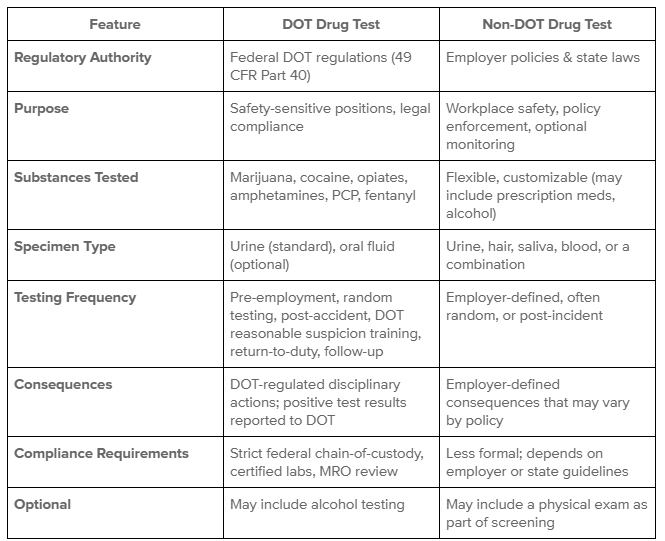
Comparing DOT vs Non-DOT Drug Testing
Understanding the differences between DOT and non-DOT testing is critical for minimizing compliance risk while optimizing workplace safety.
Benefits of DOT Drug Testing
DOT drug testing provides several advantages for employers in safety-sensitive industries:
- Ensures safety in high-risk industries, including trucking, aviation, and railroads.
- Maintains DOT compliance and avoids costly penalties or violations.
- Promotes employee accountability and workplace integrity.
- Standardizes testing procedures and requires certified laboratories, which creates legally defensible results.
These benefits reinforce public trust and protect both employees and the organization from safety incidents and legal exposure.
Advantages and Disadvantages: DOT vs Non-DOT
Both DOT and non-DOT testing programs have their pros and cons. Employers should maintain separate programs to ensure compliance while maximizing workplace safety.
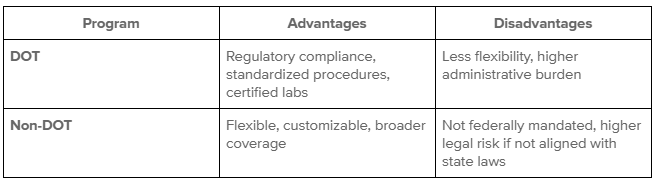
Keeping DOT and non-DOT testing separate prevents compliance issues and ensures that employees in safety-sensitive roles are tested in accordance with federal requirements.
Which Is Better? DOT vs Non-DOT Drug Tests
There is no single “better” test. The appropriate program depends on the industry, employee roles, and regulatory requirements. Consider the following:
- DOT testing is mandatory for safety-sensitive transportation positions.
- Non-DOT testing supplements workplace safety programs and broader drug-free initiatives.
- Employers should assess their workforce’s risk profile, safety obligations, and regulatory requirements before selecting testing programs.
This evaluation ensures both legal compliance and effective safety management.
Best Practices for Employers
Employers can optimize both DOT and non-DOT programs by following these best practices:
- Maintain separate programs for DOT and non-DOT workplace drug testing.
- Use certified labs and MROs for DOT drug screens and testing to ensure compliance.
- Align non-DOT testing with state laws and internal policies.
- Educate employees about testing policies, procedures, and potential consequences.
- Review and update substance panels regularly, including new federal additions such as fentanyl.
Adhering to best practices minimizes legal risks while also promoting a safe and productive workplace.
Select the Right DOT and Non-DOT Drug Testing Options with Fastest Labs
Selecting the right drug testing program is essential for maintaining a safe, compliant, and productive workplace. Whether your organization requires federally mandated DOT testing for safety-sensitive roles or tailored non-DOT testing to support broader workplace safety initiatives, Fastest Labs provides dependable, efficient services and testing procedures designed to meet your needs.
Employers should evaluate testing programs based on employee roles, safety responsibilities, regulatory requirements, and overall risk exposure. Partnering with experts can help design a program that not only ensures DOT agency compliance but also promotes a culture of accountability and workplace wellness.
By working with Fastest Labs, you can have confidence that your DOT and non-DOT testing programs are accurate, legally defensible, and aligned with the latest industry standards. Find a Fastest Labs near you to implement testing solutions that protect your employees, safeguard your operations, and support a compliant, drug-free workplace.